
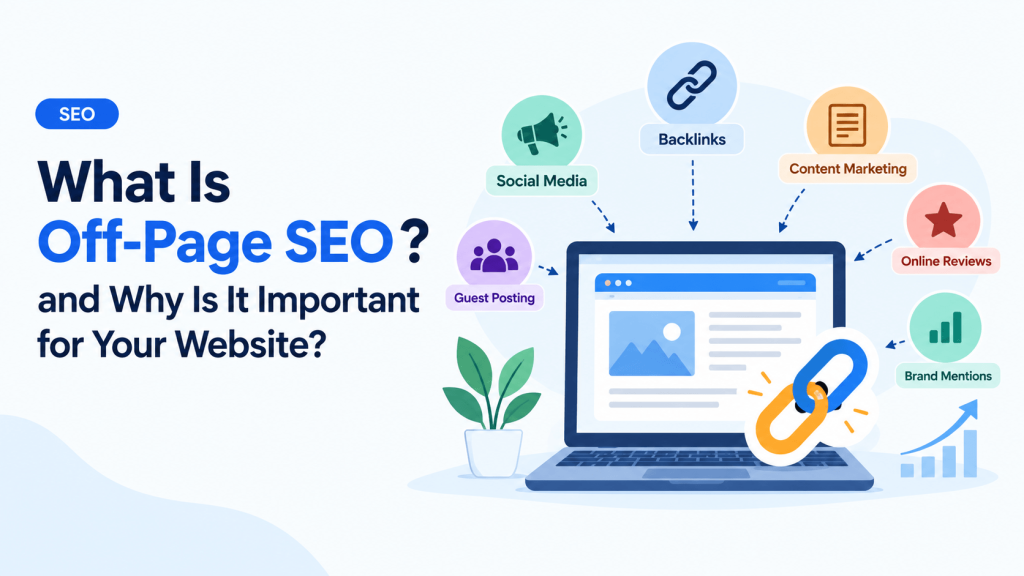
What Is Off-Page SEO and Why Is It Important for Your Website?
If you run a website, you have probably heard the term “SEO” many times. Most people know about on-page SEO, which means fixing things directly on your website, like titles, headings, and content. But there is another part of SEO that is just as important, and many beginners forget about it. This is called off-page SEO. In this blog, we will explain what off-page SEO is, why it matters, and how you can use it to grow your website’s ranking on Google. We will keep the language simple so that even a beginner can understand it easily. What Is Off-Page SEO? Off-page SEO refers to all the actions you take outside your own website to improve its position in search engine results. Unlike on-page SEO, which happens inside your site, off-page SEO happens on other platforms, websites, and social channels. In simple words, off-page SEO is about building your website’s reputation on the internet. When other trustworthy websites talk about you, link to you, or share your content, search engines like Google see this as a sign that your website is valuable and reliable. Think of it like real life. If one person says good things about a shop, it might not mean much. But if many people from different places say the shop is great, more people will trust and visit it. Google works in a similar way. When many quality websites point to your site, Google believes your website deserves a higher rank. How Off-Page SEO Works Search engines like Google use complex algorithms to decide which websites should appear at the top of search results. These algorithms look at hundreds of signals. Some signals come from your own website, like content quality and site speed. Other signals come from outside your website, and these are the off-page signals. The most important part of off-page SEO is backlinks. A backlink is simply a link from another website that points to your site. When a well-known and trusted website links to your page, it passes some of its trust and authority to you. This is often called “link juice” in the SEO world. But backlinks are not the only part of off-page SEO. It also includes things like social media mentions, brand mentions without links, guest posting, influencer outreach, forum discussions, and online reviews. All of these activities help build your website’s presence and trust across the internet. Why Is Off-Page SEO Important for Your Website? Many website owners focus only on on-page SEO and ignore off-page SEO completely. This is a big mistake. Here are the main reasons why off-page SEO matters so much. 1. It Builds Trust and Authority When other reputable websites link to yours, search engines see this as a vote of confidence. The more quality votes you get, the more authority your website gains. This authority helps your pages rank higher for competitive keywords. 2. It Improves Search Engine Rankings Backlinks remain one of the top ranking factors used by Google. Websites with strong, natural backlink profiles usually rank better than websites with weak or no backlinks, even if both have similar on-page content. 3. It Increases Website Traffic Off-page SEO does not just help with rankings. It also brings direct traffic. If your content is shared on social media or linked from a popular blog, people will click through and visit your website, even before it ranks on Google. 4. It Builds Brand Awareness When your website gets mentioned across different platforms, more people learn about your brand. Over time, this repeated exposure builds recognition and trust among your target audience. 5. It Helps You Compete With Bigger Websites Smaller websites can compete with big brands by building strong off-page SEO strategies. A well-planned link-building and outreach campaign can help a new website gain visibility much faster than relying only on on-page SEO. Popular Off-Page SEO Techniques Now that you understand why off-page SEO is important, let us look at some common techniques used to improve it. Guest Blogging – Writing articles for other websites in your niche and including a link back to your own site is one of the oldest and most effective off-page SEO methods. Link Building – This means earning backlinks from other websites naturally, or through outreach, by creating content that is genuinely useful and worth linking to. Social Media Marketing – Sharing your content on platforms like Facebook, Instagram, and LinkedIn helps increase visibility and can indirectly support your SEO efforts. Influencer Outreach – Partnering with influencers or industry experts to mention or link to your website can boost your credibility quickly. Forum and Community Participation – Answering questions and sharing helpful information on platforms like Quora or Reddit, along with a link to your website, can drive both traffic and trust. Local Listings and Citations – For local businesses, being listed on platforms like Google Business Profile and local directories helps improve local search visibility. Online Reviews – Positive reviews on platforms like Google, Trustpilot, or industry-specific review sites can improve trust signals for your brand. Off-Page SEO vs On-Page SEO It is important to understand that off-page SEO does not replace on-page SEO. Both work together as a team. On-page SEO makes sure your website is well-structured, fast, and full of quality content. Off-page SEO builds trust and authority for that content across the internet. If you only focus on on-page SEO, your website may be well-optimized, but it might struggle to rank because search engines do not see enough trust signals from outside sources. On the other hand, if you only focus on off-page SEO without a solid website, visitors may leave quickly, which can hurt your rankings too. The best results come when both on-page and off-page SEO are used together as part of a complete SEO strategy. Tips for Doing Off-Page SEO the Right Way Final Thoughts Off-page SEO is a powerful part of any successful SEO strategy. It helps build trust, authority, and visibility for your website across the internet.