
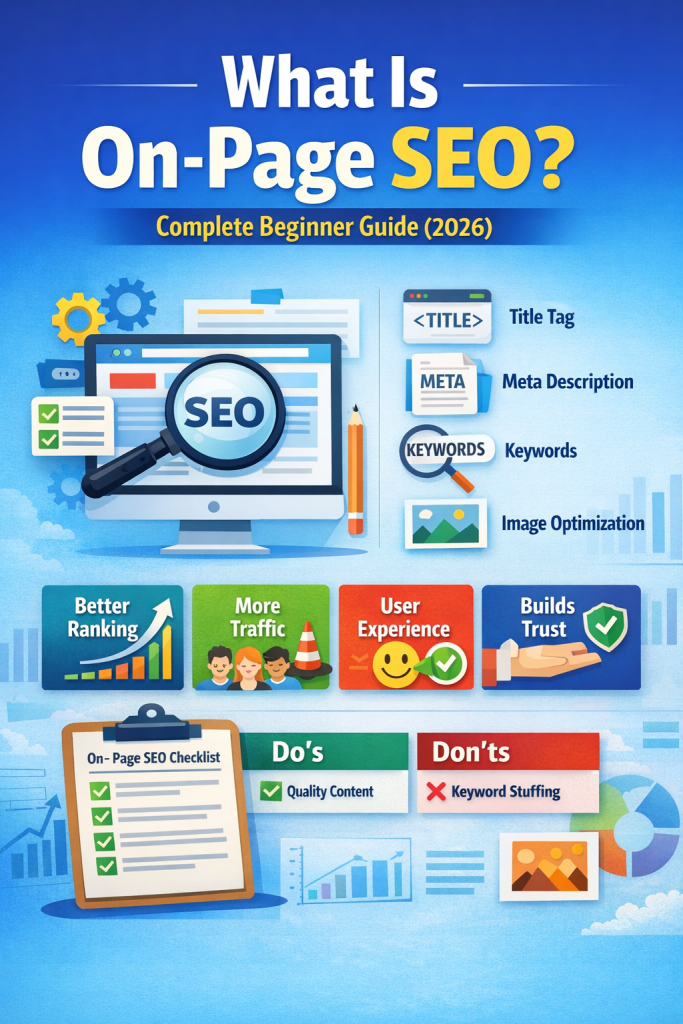
What Is On-Page SEO? Complete Beginner Guide (2026)
Introduction What is on-page SEO? If you want to rank your website on Google, you must understand SEO. SEO helps your website appear in search results when people search for information online. On-page SEO is one of the most important parts of search engine optimization. It focuses on optimizing the content and elements on your own website, helping search engines understand your content better and improving your chances of ranking higher on Google. In this guide, you will learn about on-page SEO, one of the most important parts of SEO. This article is written in simple English so that beginners can easily understand and apply it. What Is On-Page SEO? On-page SEO means optimizing the content and elements inside your website to improve its search engine ranking. This includes: Writing high-quality content with your target keywords Using proper headings (H1, H2, H3) Adding your focus keyword naturally throughout the content Optimizing images with ALT text Writing clear title tags and meta descriptions In short, on-page SEO ensures that both users and search engines can easily understand what your page is about. What is SEO? SEO stands for Search Engine Optimization. It means improving your website so that it can rank higher on search engines like Google. When your website ranks higher: More people visit your website You get more traffic You can grow your blog or business If your content is useful and high quality, Google will show it to more users. Why On-Page SEO Matters On-page SEO is crucial because it helps Google and other search engines understand your content. Google wants to provide the best results to users. If your content is: Helpful Easy to read Well-structured …then Google will reward your website with higher rankings. Proper on-page SEO ensures that your content reaches the right audience and keeps visitors engaged. Benefits of On-Page SEO: 1. Better Ranking for On-Page SEO Strong on-page SEO increases your chances of ranking on the first page of Google. 2. More Organic Traffic Optimized content with proper on-page SEO brings free traffic from search engines without spending on ads. 3. Better User Experience for On-Page SEO Good on-page SEO makes your content easier to read and navigate, keeping users longer on your website. 4. Builds Trust High-quality content with proper on-page SEO builds trust with users and Google alike. Key Elements of On-Page SEO Let’s break down the essential elements of on-page SEO: 1. Title Tag The title tag is the main heading that appears on Google search results. Tips: Keep it under 60 characters Include your focus keyword naturally Make it engaging Example: What Is On-Page SEO? Beginner Guide (2026) 2. Meta Description Meta description is a short summary of your page. Tips: Keep it under 160 characters Write clearly and simply Add keyword naturally A good meta description improves your click rate. 3. Headings (H1, H2, H3) Headings help organize your content. H1 → Main title H2 → Main sections H3 → Sub-sections Proper headings make your content easy to scan and improve on page SEO. 4. Keyword Optimization Use your focus keyword naturally In the title In headings In the first paragraph Sparingly throughout the content Avoid keyword stuffing 5. Content Quality High-quality content is central to on-page SEO. Ensure your content is: Helpful Easy to understand Original (no copy) Detailed and informative Avoid: Thin content Duplicate content 6. Image Optimization Add ALT text to all images with your keyword where relevant. This is part of good on-page SEO practice. Tips Use proper file name Compress image size for fast loading 7. Internal Linking Internal linking means linking your pages to other pages on your website. Benefits: Helps users navigate Improves SEO Increases time on site On-Page SEO Checklist (Beginner Friendly) Before publishing your article, check this: Keyword added in title Meta description written Headings used properly Content is original No keyword stuffing Images have ALT text Internal links added Content is easy to read Common On-Page SEO Mistakes Avoid these mistakes: 1. Keyword Stuffing Using too many keywords makes content unnatural and can harm your ranking. 2. Duplicate Content Copying content from other websites can reduce your SEO performance. 3. Thin Content Short and low-value content will not rank on Google. 4. Missing ALT Text Images without ALT text are not SEO-friendly. 5. Poor Readability If users cannot understand your content, they will leave your website quickly. Simple Example of On-Page SEO Let’s say your topic is: “Best SEO Tips” a Good On-Page SEO will include: Keyword in title Proper headings Simple language Useful and practical tips Images with ALT text Pro Tips for Better Ranking (2026) Here are some extra tips to rank faster: Write at least 1000+ words Use simple and clear English Add 2–3 images in your blog Update your content regularly Focus on solving user problems Conclusion On-Page SEO is one of the most important parts of SEO. It helps improve your website ranking and user experience. If we want success in SEO, always remember: Focus on users, not just Google. When your content: Solves user problems Is easy to read Provides real value Then Google will automatically rank your website higher. Avoid bad practices like: Keyword stuffing Duplicate content Low-quality content Always create high-quality, helpful, and simple content.